Between Identity and Global Perspectives: Managing English Curriculum Integration in Islamic Boarding Schools
DOI:
https://doi.org/10.21580/jawda.v7i2.2026.31232Keywords:
curriculum integration; curriculum management; English language education; global perspective; pesantren valuesAbstract
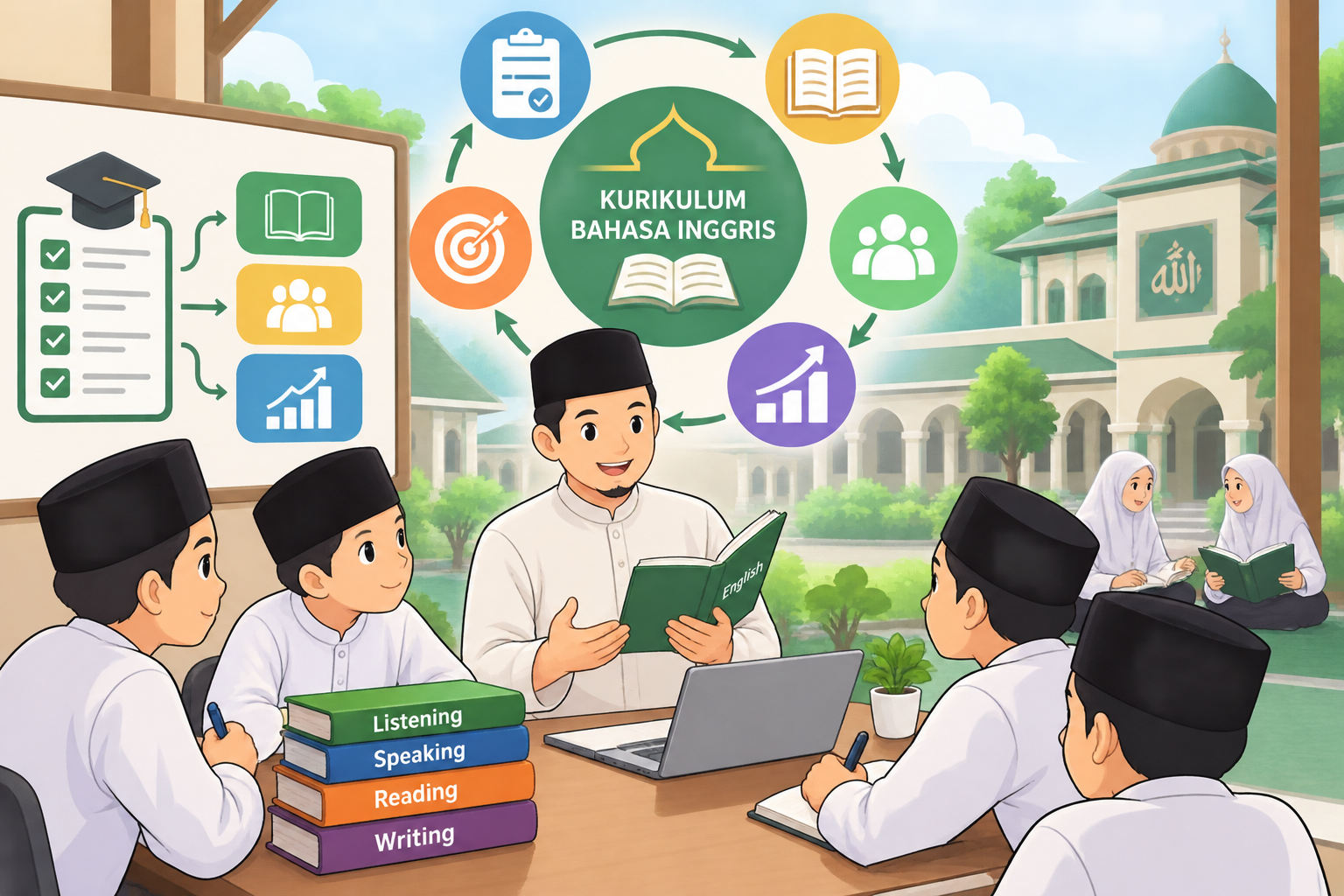
The management of pesantren-based English curriculum integration is increasingly important in preparing students for global engagement while preserving their cultural and religious identity. This study examines the management of English curriculum integration at Pesantren Sunan Drajat, the factors that support and inhibit it, and its implications for students’ global perspectives. Using a qualitative approach, data were collected through observation, interviews, and documentation. The findings reveal three interrelated stages of curriculum management: planning, implementation, and evaluation. Planning emphasizes goal setting, alignment of vision and mission, and curriculum synchronization with pesantren principles. Implementation incorporates pesantren values into operational practices, learning materials, and activities, while evaluation monitors program effectiveness and identifies areas for improvement. Management commitment, contextual learning materials, and adequate facilities support integration, whereas low student motivation and demanding pesantren activities present challenges. This study’s novelty lies in demonstrating how these three stages collectively foster students’ global perspectives without compromising pesantren identity. The program also enhances students’ cross-cultural communication skills and confidence in pursuing international opportunities.
Downloads
References
Aliyah, Adenin Nur. “Exploring the Impact of Home and School Environments on Students’ English Proficiency as Foreign Language.” Jurnal REVORMA 5, no. 2 (2025): 233–42.
Amini, Nuraini, Arnisa Naddya, Abdu Mizar Ridho, Susanti, and Nur Aisah. “Implementasi Perencanaan (Planning) Manajemen Dalam Lembaga Pendidikan Islam (Studi Kasus SDIT Ma’had Muhammad Saman Sunggal).” Jurnal Pendidikan Dan Konseling 5, no. 1 (2023): 1546–53.
Fandana, Reza, Rizqy Aulia Azzahro, and Iqbal Apif Munadi. “Mengembangkan Kemahiran Berbicara Bahasa Inggris Dengan Metode Situated Learning Activity Dalam Kegiatan Muhadatsah Yaumiyyah.” JURNAL PENGABDIAN MASYARAKAT BANGSA 2, no. 9 (2024): 4161–65.
Hidayat, Mansur. “MODEL KOMUNIKASI KYAI DENGAN SANTRI DI.” Jurnal Komunikasi ASPIKOM 2, no. 6 (2016): 385–95.
Husnaini, and Fidia Ditazam Malik. “INVESTIGATING STUDENTS ’ NEEDS FOR THE WEEKLY ENGLISH PROGRAM AT MUHAMMADIYAH BOARDING.” Exposure: Jurnal Pendidikan Bahasa Inggris 14, no. May (2025): 33–46.
Jasim, Yaser A. “Benefits of Learning A Second Language,” 2018, 1–4.
Lubis, Juliani Patiyasa, Neng Zahra Nurraya Fitri, and Salwa Camilia Ridwan. “Pentingnya Menguasai Bahasa Inggris Dan Faktor Yang” 3, no. 3 (2024): 3599–3605.
Mardiah, and Syarifuddin. “MODEL-MODEL EVALUASI PENDIDIKAN.” Mitra Ash-Shibyan: Jurnal Pendidikan & Konseling 02, no. 01 (2007): 38–50.
Marita, Azzahra Iswi, Alisa Nurhasanah Salam, and Suratman Suratman. “ANALISIS KURIKULUM PESANTREN: KONSEP, TUJUAN, DAN IMPLEMENTASI DALAM PENDIDIKAN ISLAM.” Jurnal Kajian Agama Islam 9, no. 1 (2025): 41–51.
Novitasari, Dwiana, Mar’atus Susani, and Selzhafani Nur Syah Putri. “Synergy of Language and Faith : English Week Immersion Program as a Platform for Religious and Linguistic Development.” Journal of English for Academic and Specific Purposes (JEASP) 8, no. 2 (2025): 233–45.
Putra, Eka Grana Aristyana Dewi A.A. Gede Adi Mega. “A DAY OUT WITH FOREIGNER : AN EFFORT TO IMPROVE STUDENT ’ S CONFIDENCE IN COMMUNICATING IN ENGLISH.” Exposure: Jurnal Pendidikan Bahasa Inggris 14, no. November (2025): 400–412.
Rofiq, Ainur, and Abdur Rozaq. “PESAN DAKWAH SUNAN DRAJAT DALAM WEJANGAN CATUR PIWULANG (Analisis Semiotika Charles Sanders Pierce).” AN-NASHIHA : Journal of Broadcasting and Islamic Communication 03, no. 02 (2023): 48–55. https://doi.org/10.55352/an-nashiha.v3i2.740.
Rosyidah, Naeli, Slamet Pambudi, and Prima Septyo Wibowo. “‘ English-Tren ’ Program In Developing Santris ’ Speaking Skills For Facing Global Challenges.” Tarling: Journal of Language Education 7, no. 1 (2023): 1–15.
Sari, Windy Novia, Edy Soesanto, Alfina Ainun Maghfiroh, Aprizal Zulfikar, Universitas Bhayangkara, and Jakarta Raya. “Cendikia Pendidikan” 2, no. 5 (2023). https://doi.org/10.9644/scp.v1i1.332.
Tiya, Deswan. “Manajemen Kurikulum Pembelajaran Islam Di Pesantren Menghadapi Era Modern.” AKSI: Jurnal Manajemen Pendidikan Islam 3, no. 3 (2025): 161–74.
Wiranata, RZ. Ricky Satria. “TANTANGAN, PROSPEK DAN PERAN PESANTREN DALAM PENDIDIKAN KARAKTER DI ERA REVOLUSI INDUSTRI 4.0.” Jurnal Komunikasi Dan Pendidikan Islam 8, no. 1 (2019): 61–92.
Zanariah, Teh, Mohd Raus, Noor Aireen Ibrahim, and Kew Si Na. “Factors Influencing Motivation in Learning English as a Second Language among TVET Undergraduates” 15, no. 9 (2025): 785–99.
Downloads
Published
Issue
Section
License
Copyright (c) 2026 Jawda: Journal of Islamic Education Management

This work is licensed under a Creative Commons Attribution-ShareAlike 4.0 International License.
Authors who publish with this journal agree to the following terms:
Authors are able to enter into separate, additional contractual arrangements for the non-exclusive distribution of the journal's published version of the work (e.g., post it to an institutional repository or publish it in a book), with an acknowledgement of its initial publication in this journal.
Authors are permitted and encouraged to post their work online (e.g., in institutional repositories or on their website) prior to and during the submission process, as it can lead to productive exchanges, as well as earlier and greater citation of published work (See The Effect of Open Access).