Leading Value Based Educational Transformation: Strategic Leadership and the Institutionalization of a Culture of Love in Islamic Secondary Education
DOI:
https://doi.org/10.21580/jawda.v7i2.2026.32425Keywords:
management strategy; madrasah head; love-based curriculum; Islamic education management; appreciative inquiryAbstract
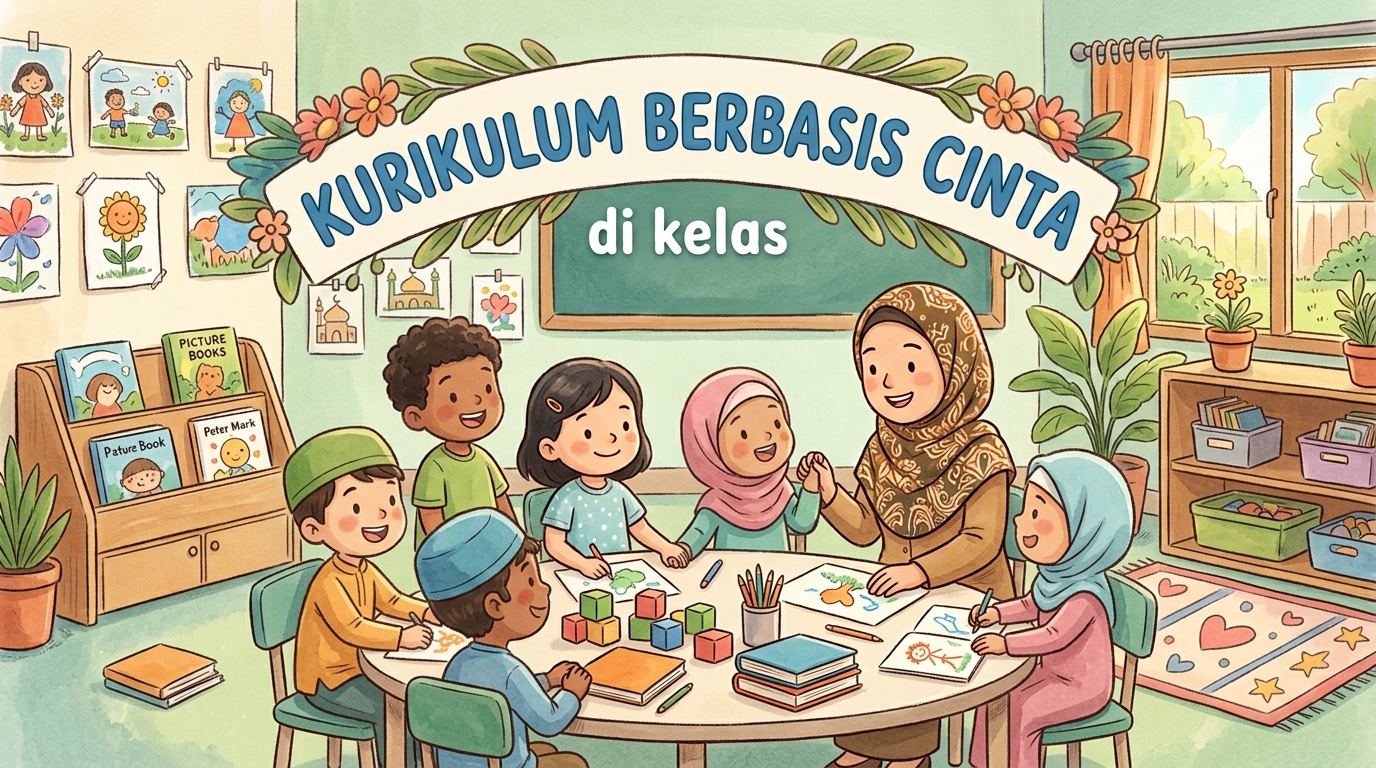
This study aims to analyze the management strategies of madrasah heads in implementing the Love-Based Curriculum (KBC) at Madrasah Aliyah Negeri 2 Bandung City. Using a qualitative case study approach within the 4D Appreciative Inquiry framework (discovery, dream, design, destiny), data were collected through semi-structured interviews, observations, and documentation from purposively selected subjects. The results of the study show that the implementation of KBC is an institutional transformation process oriented towards developing a humanistic culture of education. In the discovery stage, madrasah heads build awareness of the dehumanization of education. The dream stage constructs a vision of a madrasah grounded in an inclusive, dialogical culture of love. The design stage is carried out through strategic leadership, adaptive financing management through program insertion, and gradual changes in organizational culture. The destiny stage focuses on institutionalizing a love-based culture of education for long-term sustainability. The research concludes that the success of KBC implementation depends on the strategic leadership capacity of the madrasah head, the management of organizational culture, and the integration of the values of Islamic Education Management. The typical finding of this study is that the success of value-based policies does not necessarily require a large formal program budget, but rather the ability to build an organizational culture that sustains the internalization of values.
Downloads
References
Aisyah, Siti. "Love-Based Curriculum Management: Efforts to Build Humanist and Transformative Islamic Education." Journal of Islamic Education 11, no. 2 (2026): 437–50.
Bush, Tony, and Moses Kiggundu. "Islamic Leadership in Educational Contexts." Religions 10, no. 3 (2019): 1–13. https://doi.org/10.3390/rel10030178.
Carter, Nancy, Denise Bryant-Lukosius, Alba DiCenso, Jennifer Blythe, and Alan J Neville. "The Use of Triangulation in Qualitative Research." Oncology Nursing Forum 41, no. 5 (2014): 545–47. https://doi.org/10.1188/14.ONF.545-547.
Chen, Peng, and Carsten Schmidtke. "Humanistic Elements in the Educational Practice at a United States Sub-Baccalaureate Technical College." International Journal for Research in Vocational Education and Training 4, no. 2 (2017): 117–45. https://doi.org/10.13152/IJRVET.4.2.2.
Chotimah, Chusnul, Saifuddin Zuhri Qudsy, and Mirna Yusuf. "Superficial Implementation of Religious Moderation in Islamic Educational Management." Cogent Education 12, no. 1 (2025). https://doi.org/10.1080/2331186X.2024.2442235.
Cooperrider, David L, and Diana Whitney. Appreciative Inquiry: A Positive Revolution in Change. San Francisco: Berrett-Koehler Publishers, 2005.
Edwards III, George C. Implementation and Public Policy. Washington, DC: Congressional Quarterly Press, 1980.
Finkelstein, Sydney, Donald C Hambrick, and Albert A Cannella. Strategic Leadership: Theory and Research on Executives, Top Management Teams, and Boards. New York: Oxford University Press, 2009.
Hasan, Kamaruddin, and Hamdan Juhannis. "Religious Education and Moderation: A Bibliometric Analysis." Cogent Education 11, no. 1 (2024). https://doi.org/10.1080/2331186X.2023.2292885.
Hermanto, Y B. "Transformational Leadership, OCB, QWL and Teacher Performance." Heliyon, 2024. https://doi.org/10.1016/j.heliyon.2024.e23456.
Indonesia, Ministry of Religion of the Republic. A Guide to a Love-Based Curriculum. Jakarta: Ministry of Religion of the Republic of Indonesia, 2025.
Khori, Ahmad. "Strategic Management and Quality of Islamic Education." Manageria: Journal of Islamic Education Management 1 (2016).
Kurniawan, Muhammad. "Dialogic Leadership in Islamic Schools." Journal of Islamic Education Management 9, no. 1 (2021): 45–60.
Mazmanian, Daniel A, and Paul A Sabatier. Implementation and Public Policy. Glenview, IL: Scott Foresman, 1983.
Miles, Matthew B, A Michael Huberman, and Johnny Saldana. Qualitative Data Analysis: A Methods Sourcebook. Los Angeles: Sage Publications, 2014.
Moosa, Riyad, and Ahmed Mohamdali Haji. "Islamic Finance Education for University Students: A Scoping Review of the Scopus Database." Education and Learning 20, no. 1 (2026): 13–21. https://doi.org/10.11591/edulearn.v20i1.22133.
Nata, Abuddin. Education Management: Overcoming the Weaknesses of Islamic Education in Indonesia. Jakarta: Kencana Prenada Media Group, 2012.
Novita, Mona, Teten Jalaludin Hayat, and Abu Hasan Agus R. "Spiritual and Value-Based Islamic Educational Leadership in Indonesia: A Hermeneutic Inquiry into Love, Moderation, and Institutional Management." Journal of Islamic Education 7, no. 2 (2026): 336–53.
Patton, Michael Quinn. Qualitative Research and Evaluation Methods. 4th ed. Thousand Oaks, CA: SAGE Publications, 2015.
Rahmawati, Emma. "Self-Regulated Learning through the Integration of Love-Based Curriculum in Digital Education: A Conceptual Analysis." IJOMER 4, no. 1 (2026): 20–34. https://doi.org/10.30762/ijomer.v4i1.8173.
Salamuddin, Ahmad, Munawar Rahmat, Mokh Iman Firmansyah, and Edi Suresman. "Humanistic Approach to Islamic Education Learning Management in Shaping Religious Maturity Among High School Students: An Exploratory Study." Journal of Islamic Education, 2025, 411–29.
Saputri, Lidya, Ira Widiarti, Jakaria, and Ali Idrus. "Financial Management of Education Financing and the Source of Education Costs." Journal of Education 7 (2026): 1059–66.
Schein, Edgar H. Organizational Culture and Leadership. 4th ed. San Francisco: Jossey-Bass, 2010.
Downloads
Published
Issue
Section
License
Copyright (c) 2026 Jawda: Journal of Islamic Education Management

This work is licensed under a Creative Commons Attribution-ShareAlike 4.0 International License.
Authors who publish with this journal agree to the following terms:
Authors are able to enter into separate, additional contractual arrangements for the non-exclusive distribution of the journal's published version of the work (e.g., post it to an institutional repository or publish it in a book), with an acknowledgement of its initial publication in this journal.
Authors are permitted and encouraged to post their work online (e.g., in institutional repositories or on their website) prior to and during the submission process, as it can lead to productive exchanges, as well as earlier and greater citation of published work (See The Effect of Open Access).